







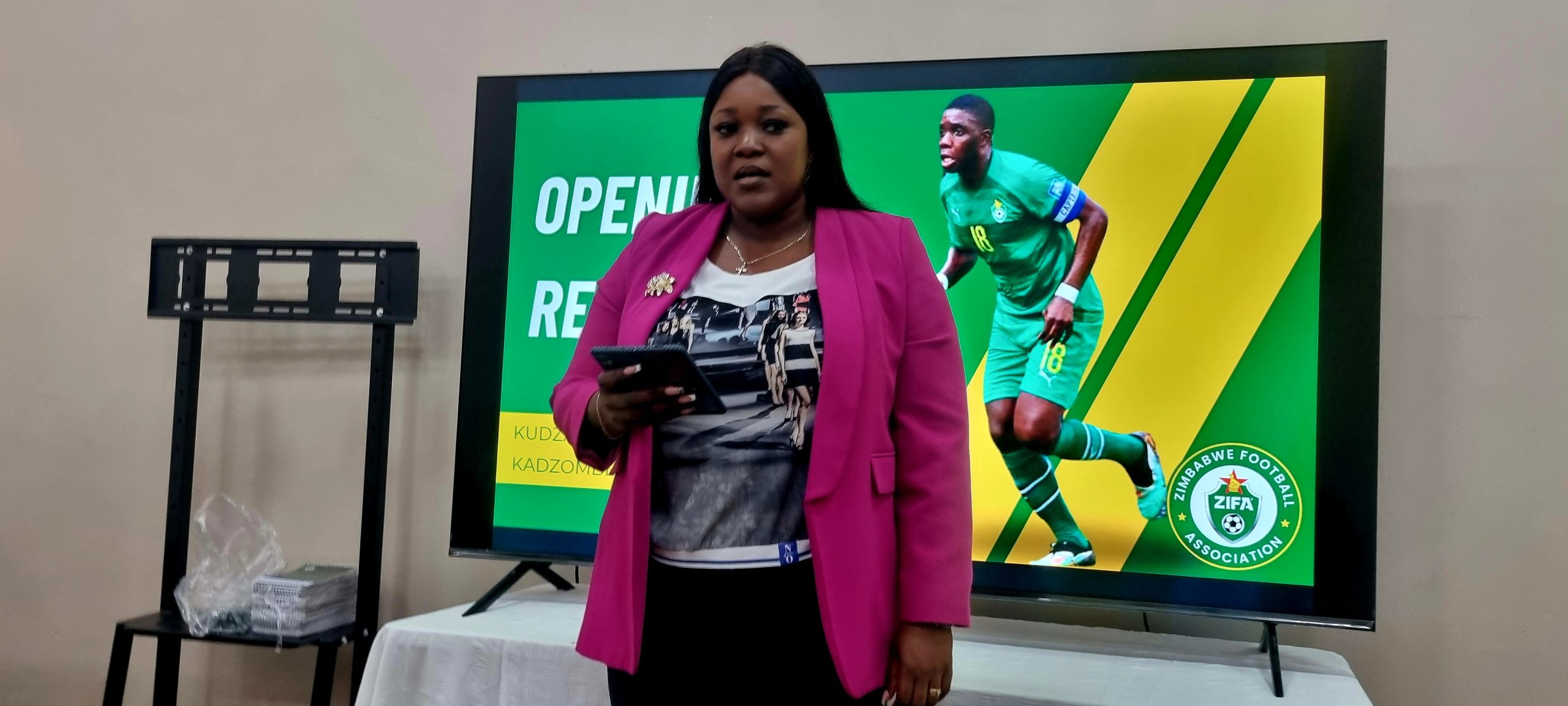
The Football Association (ZIFA) on Wednesday hosted a landmark workshop at ZIFA Village, bringing together key figures from the organisation and sports journalism.
The event marked a renewed commitment to transparency and collaboration, signalling a fresh chapter in the country’s football development.
The gathering was attended by prominent sports journalists alongside ZIFA’s newly elected executive committee members, including Mrs. Kudzai Kadzombe, Chairperson of the Marketing and Media Committee.
Opening the proceedings, Mrs. Kadzombe emphasised the importance of unity and shared purpose in advancing Zimbabwean football.
“This is more than a meeting; it is a reaffirmation of our partnership, built on a shared passion for the beautiful game,” Kadzombe stated.
“Football is a national language and a unifying force in Zimbabwe. Every match carries the hopes of millions, and for that story to be told truly, we must walk together—ZIFA and the media—grounded in mutual respect, accountability, and professionalism.”
A New Dawn for Zimbabwean Football
The workshop takes place amid a period of significant reform at ZIFA, following years marred by instability and a FIFA-imposed suspension. The federation has undergone comprehensive restructuring, culminating in the election of a new leadership team led by President Nqobile Magwizi, whose tenure aims to restore stability and foster growth.
Mrs. Kadzombe, a central figure in the recent reforms, has been instrumental in championing transparency and accountability within ZIFA. Notably, the association has published its audited financial statements for the first time in nearly thirty years—a move widely praised for restoring stakeholder confidence and aligning Zimbabwean football with international best practices.
“Financial accountability has been a top priority for the first time in many years,” Kadzombe explained.
“By publishing our audited financial statements, we are demonstrating our commitment to responsible and transparent administration. This provides a solid foundation upon which to build a sustainable football economy that benefits players, clubs, and communities alike.”
Prioritising Women’s Football and Technical Progress
A key focus of the workshop was ZIFA’s renewed emphasis on women’s football. The organisation is preparing to launch a comprehensive women’s football strategy, developed through extensive consultations nationwide. The initiative aims to boost investment, raise visibility, and expand opportunities for female players across Zimbabwe.
“Our women’s national teams are once again competing in continental tournaments, reflecting our dedication to making women’s football a vital pillar of growth,” Kadzombe highlighted.
“The new strategy will ensure every young Zimbabwean girl has a fair and clear pathway to realise her potential in the game.”
Technical development also featured prominently, with ZIFA’s newly appointed technical director, Dominique Niyonzima, leading efforts to establish structured progression routes from grassroots to elite levels. The association has committed resources to coach education, youth programmes, and facilities upgrades to nurture local talent and elevate standards.
Building a Sustainable Football Economy Through Partnerships
ZIFA’s modernisation extends into its commercial strategies, with new partnerships forged across both public and private sectors. These collaborations aim to generate revenue, stimulate growth, and create a resilient football ecosystem across Zimbabwe.
Mrs. Kadzombe underlined the significance of these alliances: “We are laying the groundwork for a football economy that is inclusive and enduring. Our partnerships are about more than sponsorship—they are about creating opportunities for all stakeholders and ensuring the long-term health of the sport.”
Supporting the Warriors for AFCON 2025
As the Zimbabwean national team, the Warriors, prepare for the Africa Cup of Nations (AFCON) 2025 in Morocco, ZIFA reaffirmed its commitment to providing comprehensive support—covering logistics, training, and player welfare. The organisation also recognised the media’s crucial role in informing the public and holding stakeholders to account.